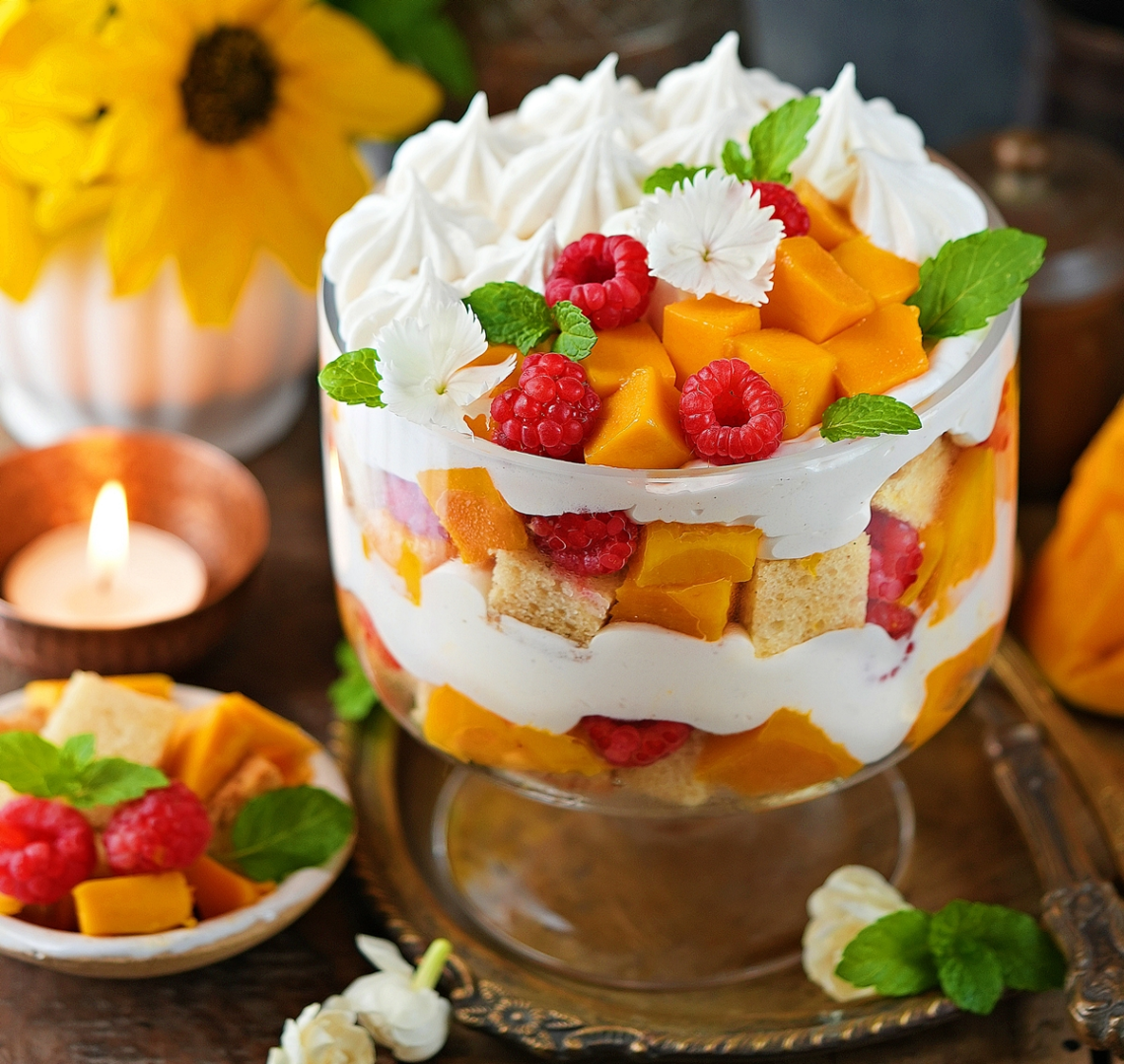
Eggless Mango Raspberry Trifle … delicious dessert when spring meets summer!
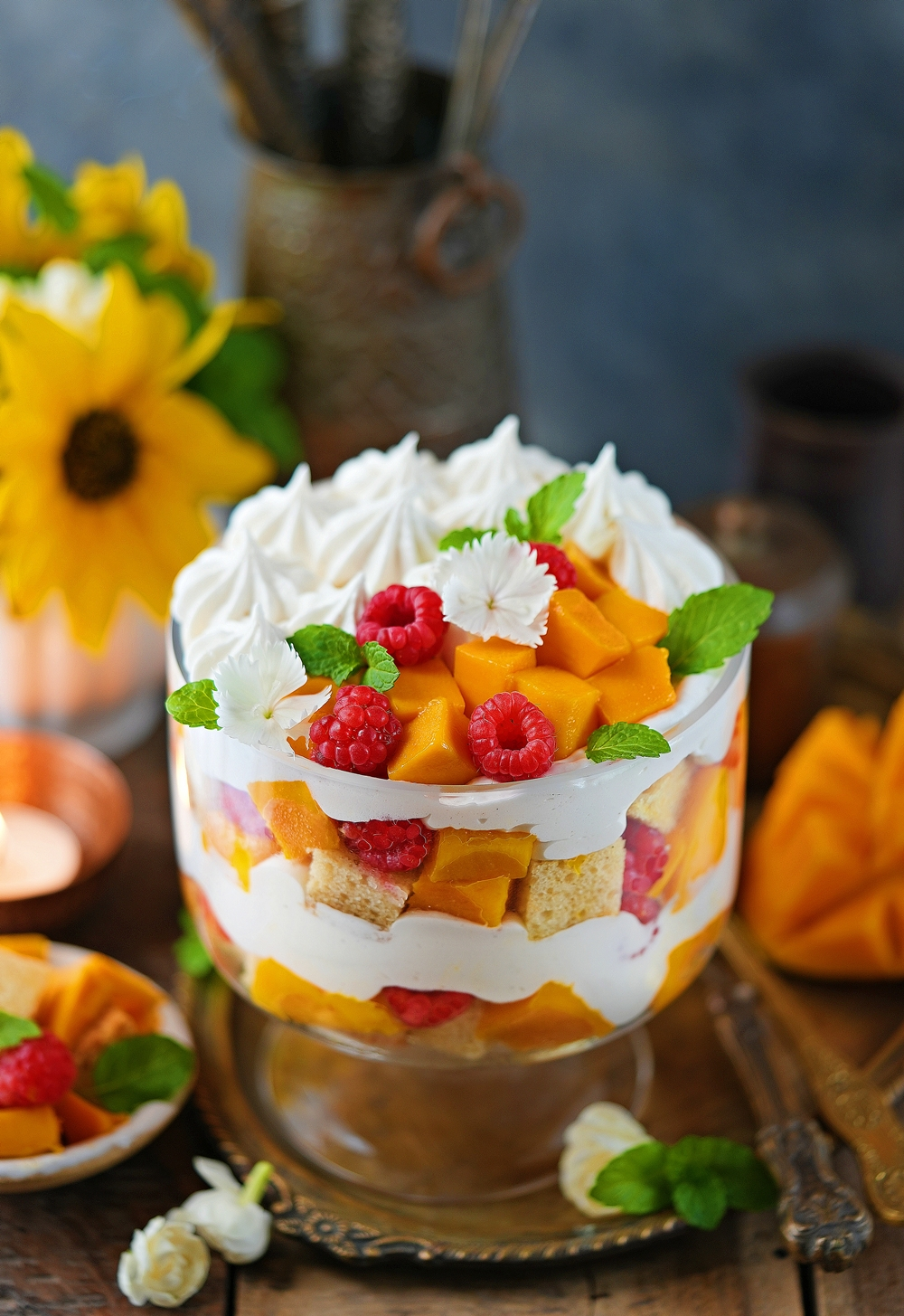
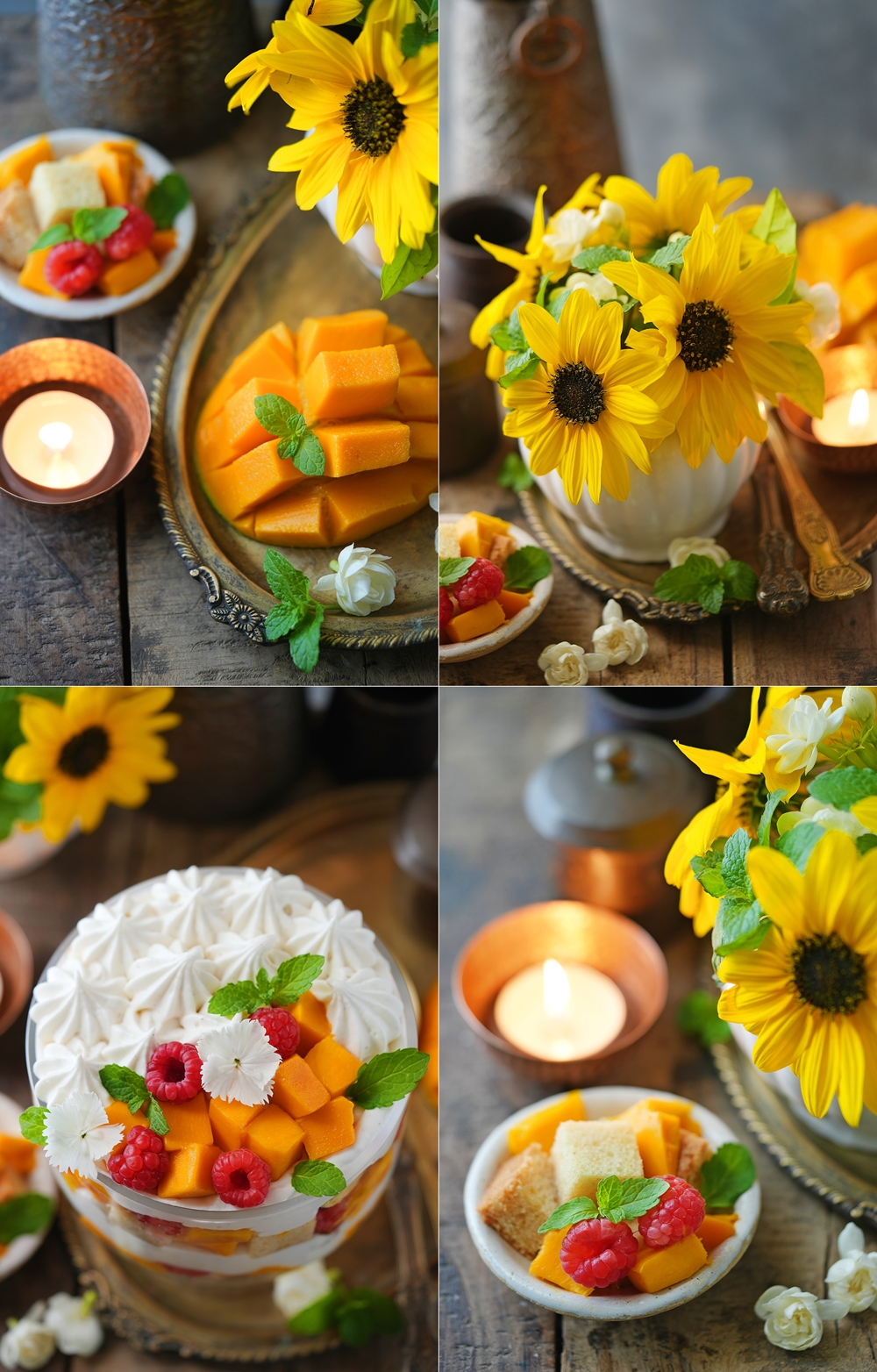
Eggless Mango Raspberry Trifle … that absolutely delicious time of the year when briefly, very briefly indeed, spring meets summer! This eggless trifle turned out to be a 10 out of 10 … fresh, exciting, light, satisfying, bursting with flavour and so indulgent without even being heavy. Throw in a bunch of bright yellow sunflowers, and oh my…
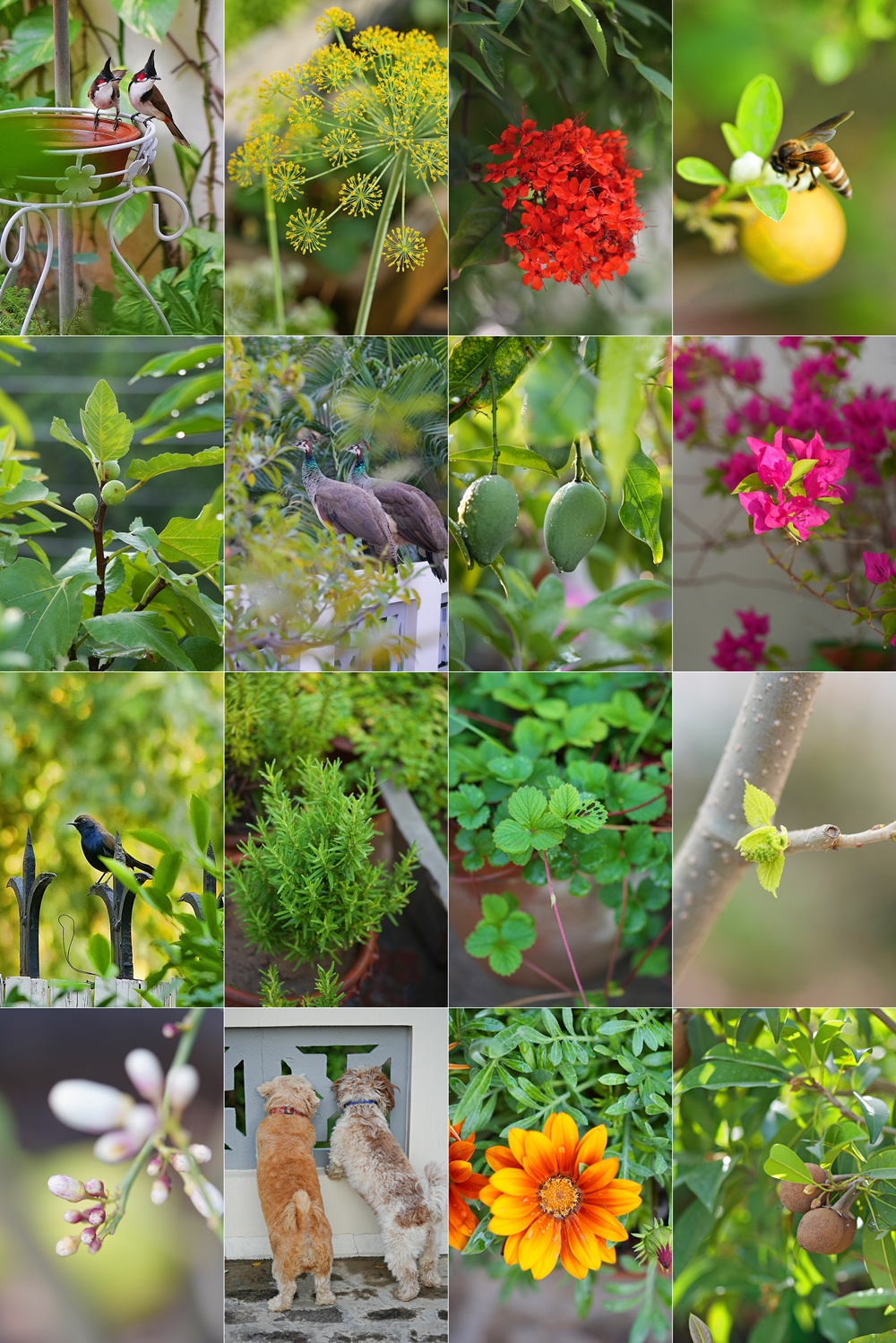
This Eggless Mango Raspberry Trifle is quite the perfect dessert for this time of the year, that time when the prettiest flowers bloom, birds are everywhere, bees too, herbs sprout new shoots overtime, happy dogs, busy peahens, mangoes hang off trees, mulberries begin to ripen rapidly … yes, that beautiful time!
It’s rare for North India to see a long Spring, a season that has eluded us these past few years, staying just for a week perhaps. Surprisingly enough, this year we’ve had the coolest April in eleven years, and we honestly couldn’t be happier. The temperatures didn’t cross a high of 28C mostly, the lows remained around 16C which actually meant we literally had spring in our steps.
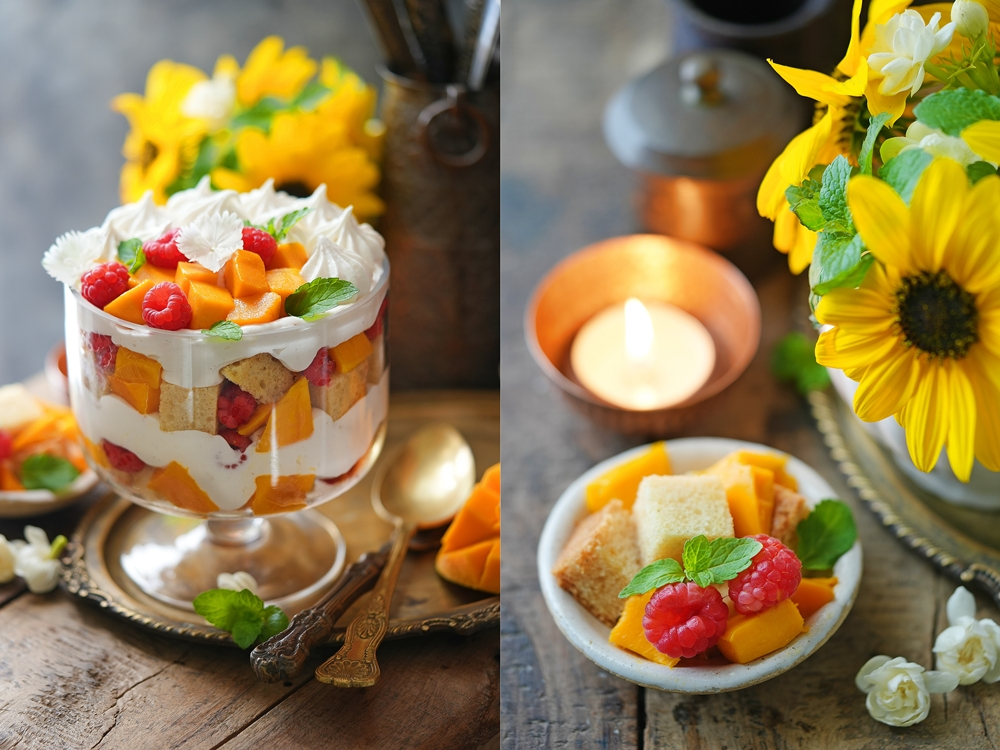
Raspberries and mangoes are two of my favourite fruits and it’s honestly very rare to find them in season at the same time. Early April was an exception this year where some early season raspberries from the Himalayas showed up quite unexpectedly. They are surprisingly excellent in taste, tiny yet packed with flavour and very juicy. That they were early season raspberries also meant that they were not that perishable. With the temperatures remaining average, they lasted several days.

Over the last few years, I’ve gotten very fond of these nutritionally dense tiny delicate berries and you can imagine how often I used them in desserts. I normally source them locally and these are the Himalayan raspberries, though my frequent trips to the UK these past couple of years have seen me squirrel a few punnets in each time.

Either which way, these delicate red raspberries give me immense joy. While raspberries are quite a recent addition to locally available berries in India, mangoes of course are a completely different ballgame.
Why are mangoes called the King of fruit in India?
Quintessentially Indian, firmly part of the Indian summer, importantly, what childhood memories are made of, mangoes are called the king of fruit due to their high nutritive value and exceptionally delicious taste. Its immense popularity is bolstered by its versatility in culinary uses, deep cultural significance in South Asia, and widespread cultivation in tropical regions.

Mangoes are a part of life here, the true king of fruit. Exquisite in taste, packed with Vit A & C, fibre and antioxidants, available in hundreds of varieties all summer long, mangoes are the quintessential Indian summer fruit, the fruit we love to love on the subcontinent. This glorious fruit finds its way to our table every single day through summer and in so many avatars. Mango desserts of course being the most colourful and fun, though I pack in quite a few savoury options too!
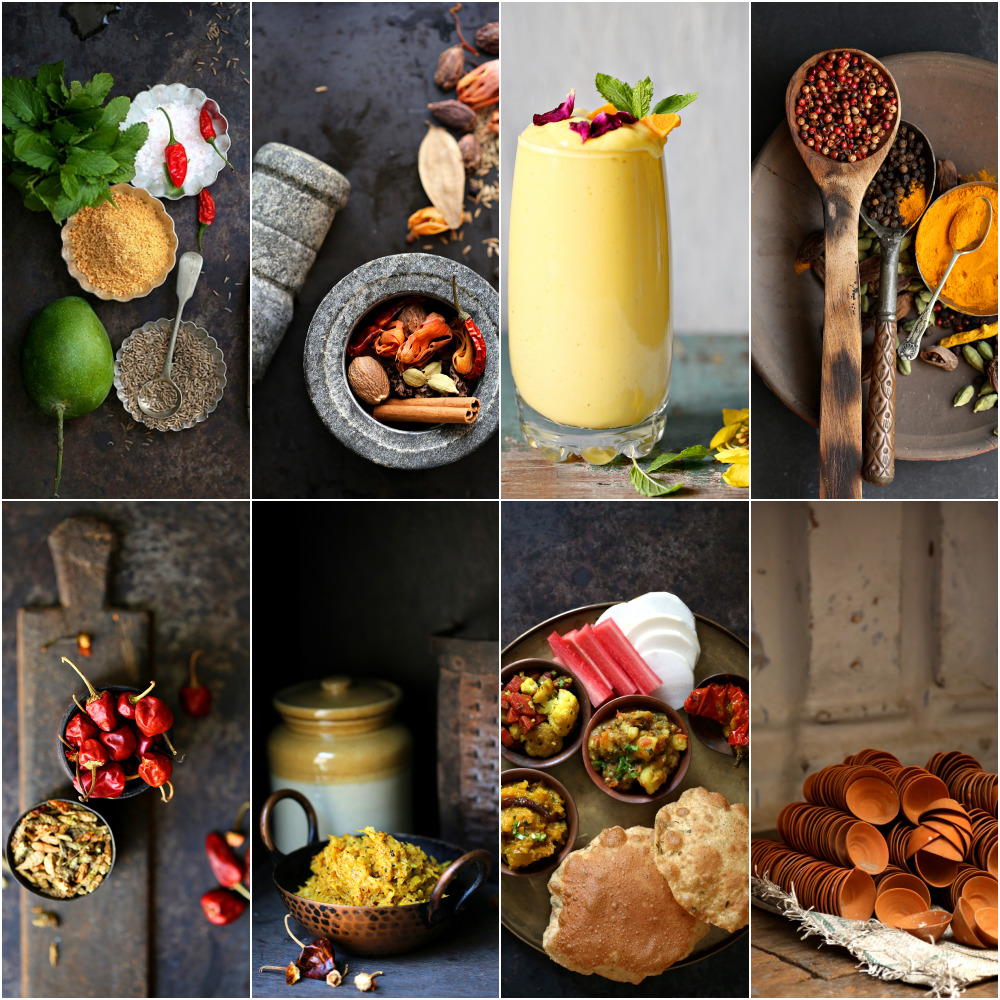
If you grew up in the 1970’s and 80’s, the world was a completely different place, pre-internet, simple, unspoilt and easy going. Worry didn’t exist and there was never any rush about anything, time didn’t fly. On the contrary, it almost stood still. And if you grew up during those years in India, summer meant mangoes and mangoes meant summer. Easy as that!

Which are the most popular varieties of mangoes in India?
This is such a difficult choice as every region of India grows its own favourite, each one vying for top position. To pick a few, Alphonso from Maharashtra/Gujarat is the best known Indian mango as it is hugely exported to the rest of the world, and is often the first luscious, sweet, perfect ripe mango to show up followed by the more sallow Safeda from Andhra Pradesh which quite literally translates to ‘white‘. I don’t use the latter in dessert because it lacks the pop of colour I seek though it’s a great choice for mango shakes.
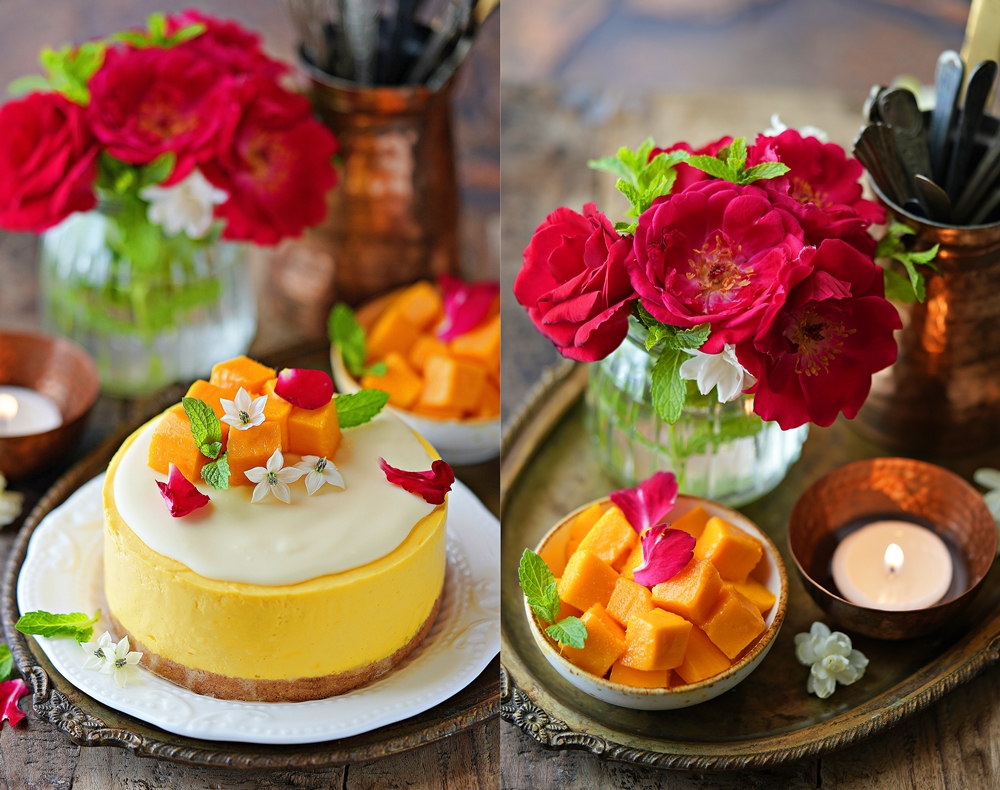
My other favourite varieties of mangoes for dessert are Kesar, Sindhuri, Pairi, Benarasi Langda & Malihabad Dassehri. These are just the tip of the iceberg, a few of the 1000-1500 odd varieties that you can find in India, the worlds largest mango grower. Chaunsa is the last variety of this long, delicious season, bringing it to a heartbreaking finale.
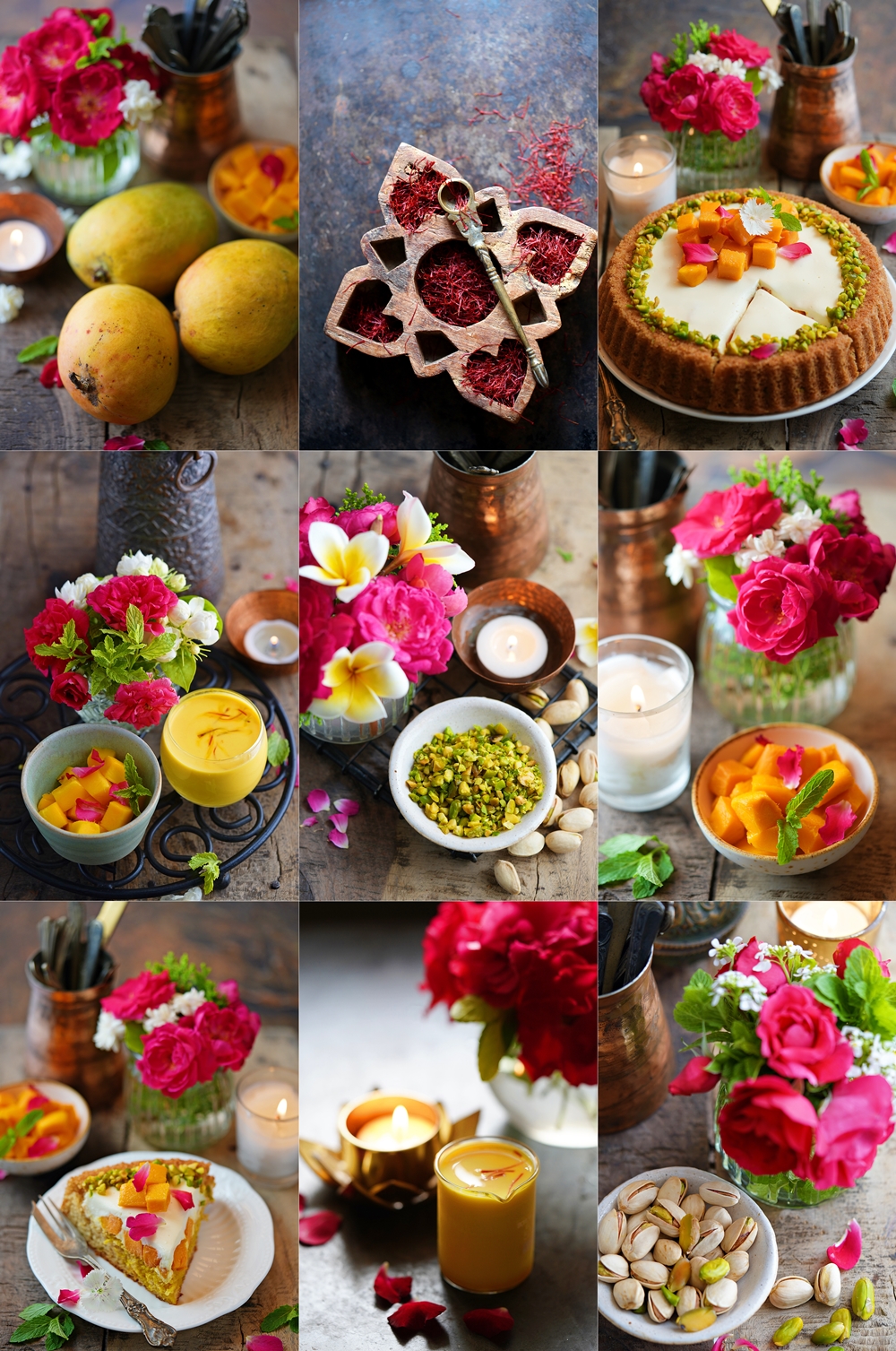
Langda and Dassehri from Uttar Pradesh are also my mums favourites, mangoes we spent dirtying our hands and clothes as kids, each carrying their own very special taste and flavour profile, something we can pick out with our eyes closed.
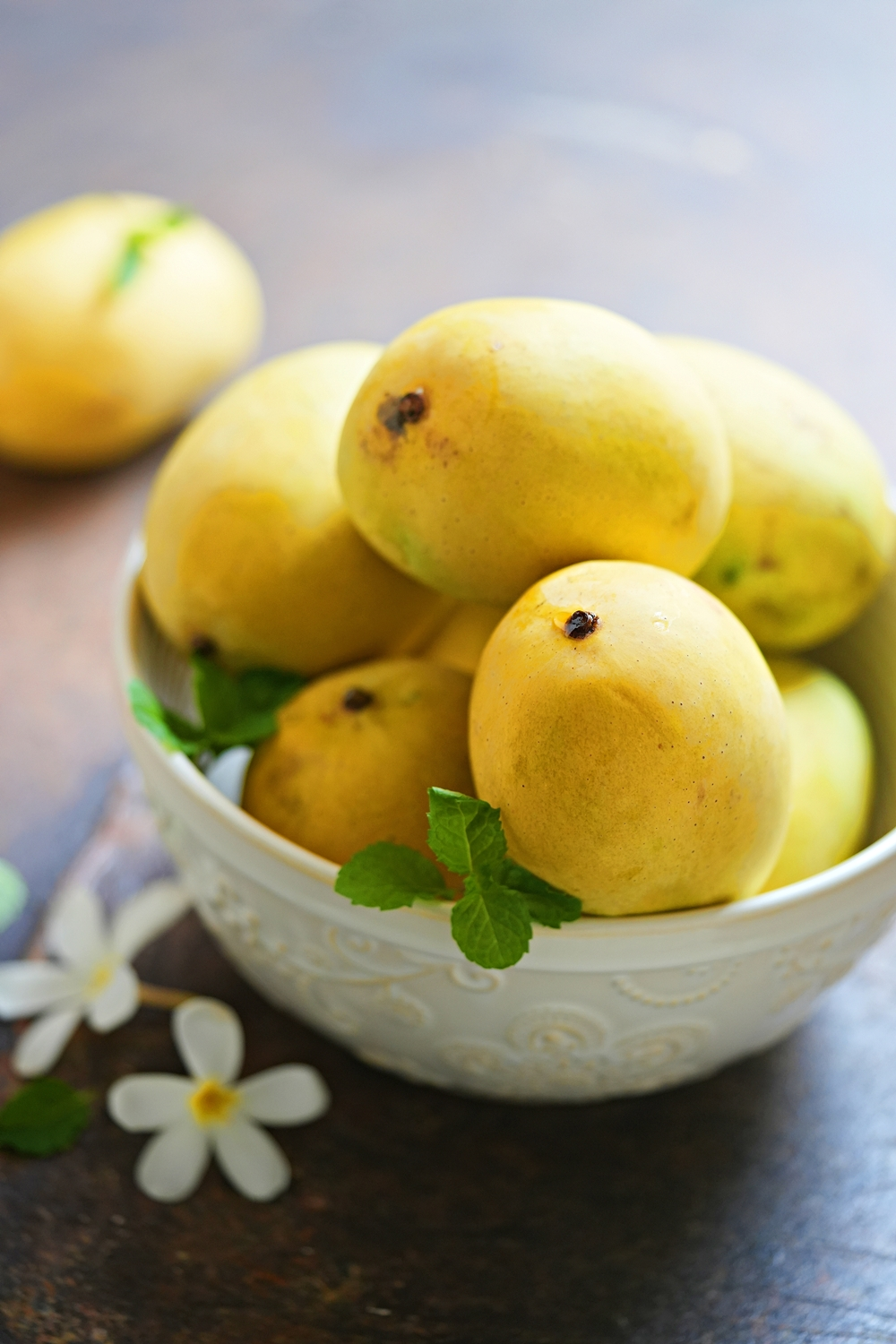
Summer holidays were normally spent in the foothills around Pipri near the Rihand Dam where my uncle was the chief engineer, other times in Banaras or rather Varanasi. At my uncles place in Pipri, kilos and kilos of ripe mangoes soaked in huge galvanized iron tubs for a few hours before they landed on the dining table once lunch was done. As kids, cousins around ranging from 8 to 14 years old, we each got a plate with a paring knife and a huge ripe, juicy mango. It was the most fun thing to peel the mango and devour it, juices streaming down the sides of our mouth, our clothes stained by the bright yellow of the Langda Aam or Dassehri. Strangely enough, there was no crazy yelling at the mess, no panic to make sure we don’t cut our hands, no one seemed to care. Pre-internet, no worry times, once done, we trooped off to the large tubs sans mangoes, dunked in to wash up and raced off to continue playing our endless, silly games.

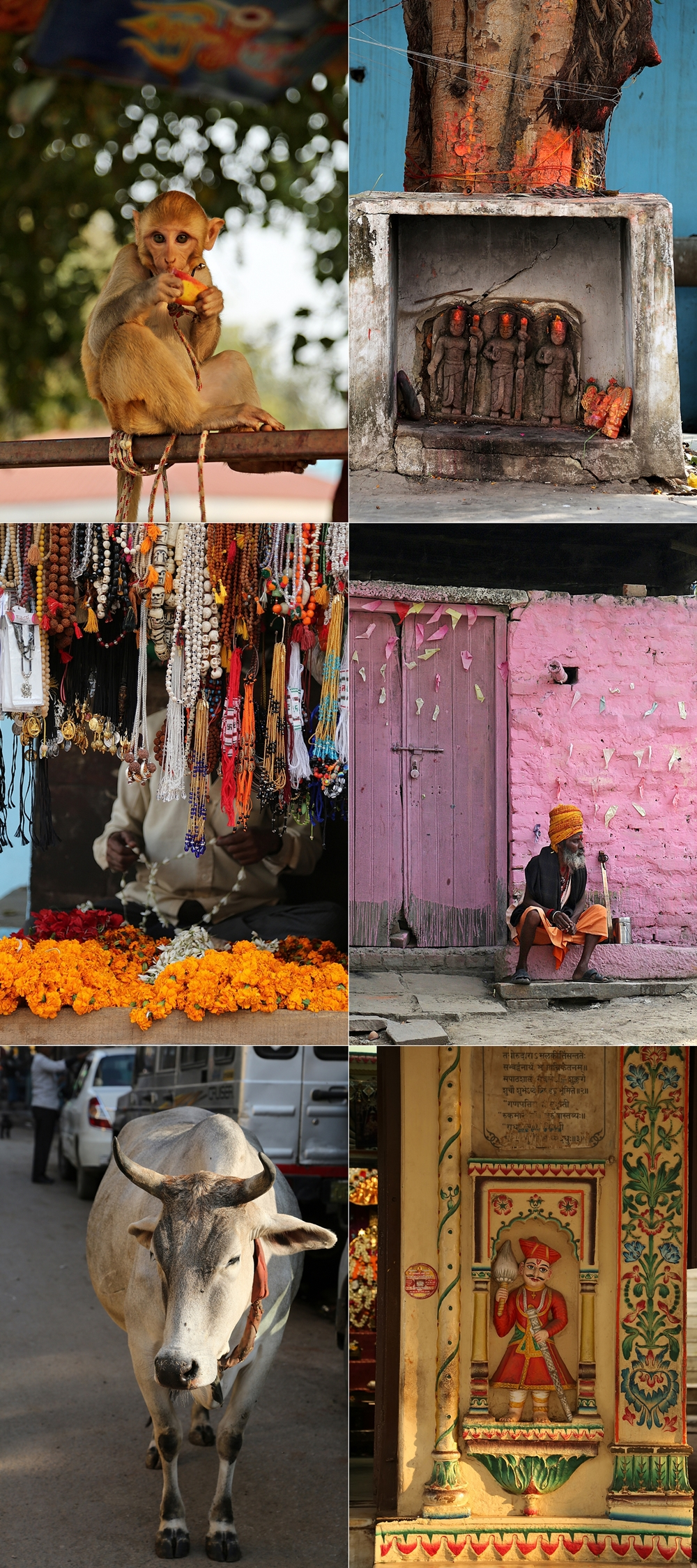
Banaras or Varanasi is one of my favourite Indian cities, a city I have returned to often. A city on the banks of the river Ganges that exists in chaos and colour, steeped in culture and devotion, a city that I never tire of, a place firmly etched in my childhood memories of summer vacations too. Those days were very different. Long, endless summer days at my uncles friends palatial house that had never-ending marble corridors, cool shiny white marble floors, the most beautiful etched hand made chandeliers, teak banisters that we would nonchalantly slide down, silk saree printing sheds in the compound, badminton courts surrounding the main house, a tiny inner room with HUGE boxes filled with dry fruits that we liberally helped ourselves to, a main kitchen, then a smaller outhouse where the khansamas or cooks would make chapatis as thin as kite paper, hand grind spices on the sil batta/ grinding stone serving up the most flavourful, delicate qormas and kebabs, sometimes koftas. Food was always central. Still is …
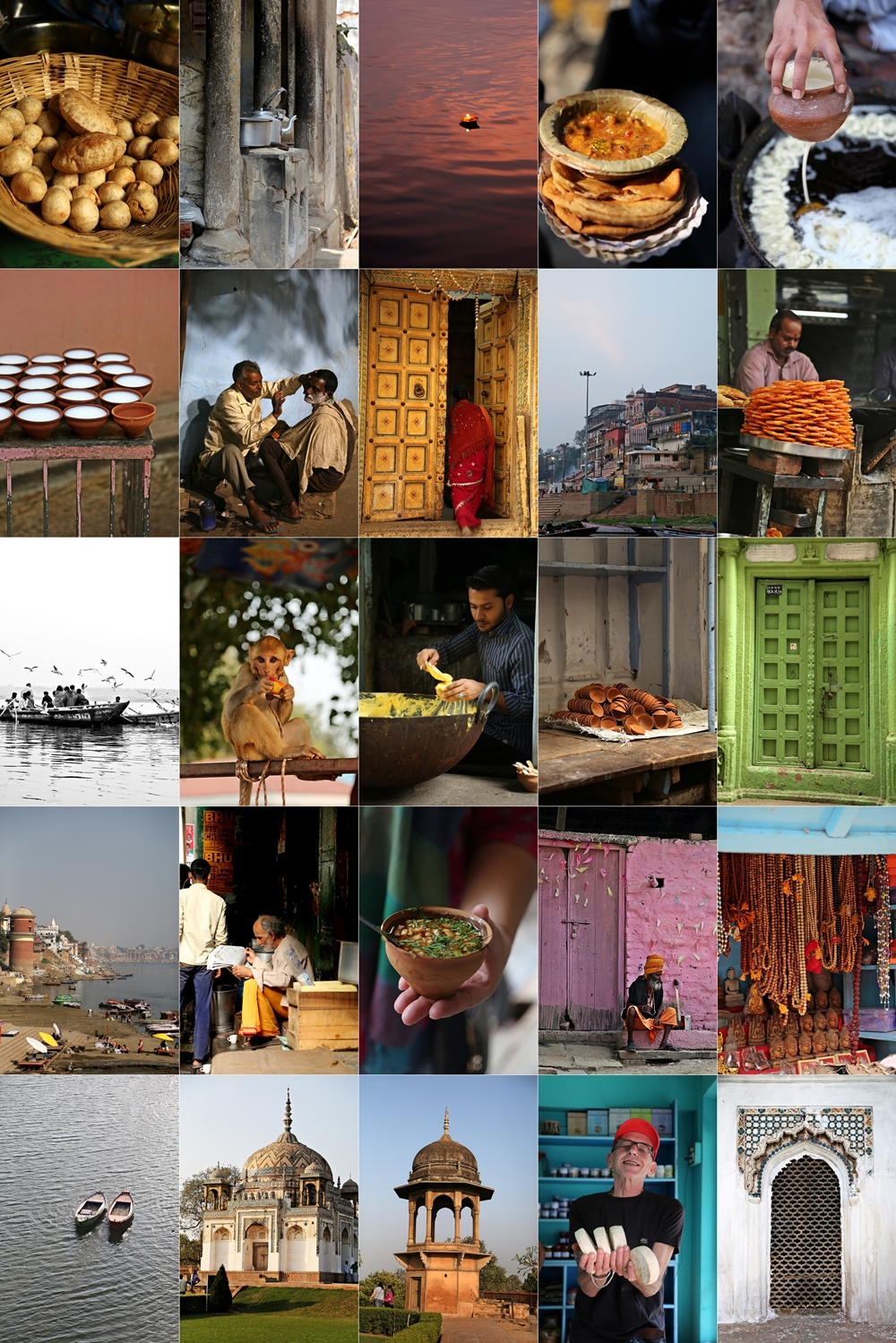
In Banaras, in our childhood, mangoes were served a little differently then, often at breakfast and after lunch. For breakfast, tables were set with a white porcelain soup plate each with a beautiful unblemished smooth skinned Banarasi langra aam placed within. That, I later learnt, is a traditional summer ritual from the region. Same bunch of cousins and friends together over summer vacations, we would gently mash the ripe mango with the skin on within our little palms and then squeeze the silky yellow mango pulp or Aamras out onto the soup plate, deftly keeping the pit/seed in. The younger ones learnt the ‘mango art’ quickly from the expert older siblings. Those mangoes were the sweetest, silkiest and most luxurious. The joy was untold, the porcelain feel of the platter still in my fingers as is the feel of the smooth, green peel of the Banarsi langda aam.
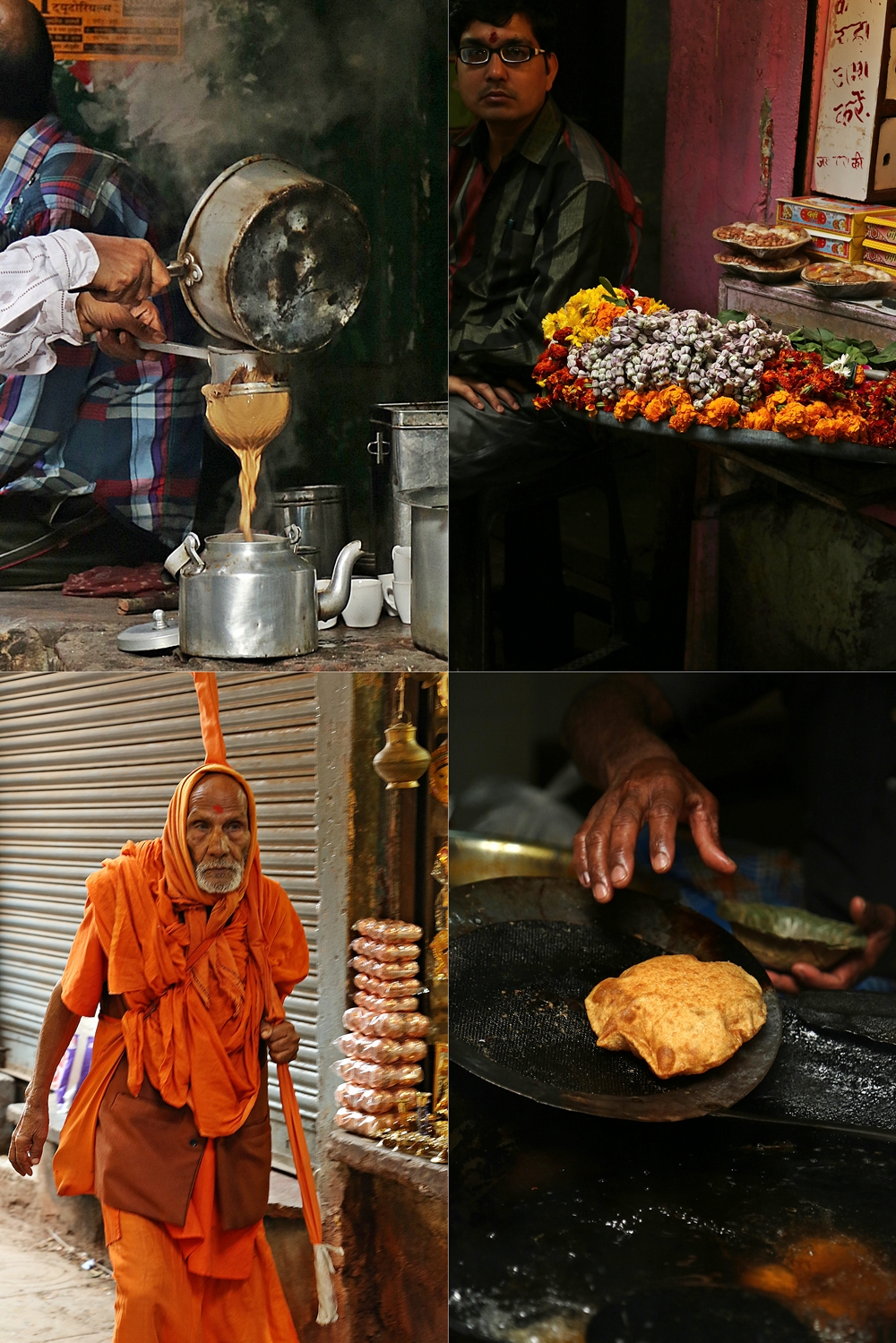
Banaras is a city that lives in my memories, a city I have returned to often because of the deep nostalgia. The more I try and capture it through my lens, the more I fall in love with it. It’s a city that grows on you despite being chaotic and very overcrowded, a city living in colour where every corner you turn is picture worthy! My vision of course changed dramatically when I visited it later. I picked out street food, rustic frames, monkeys, cows, Godmen, broken doorways, kulhads, old streets, the ghats, battered tea kettles, woks of hot oil, everything unfancy! How can I not fall in love …
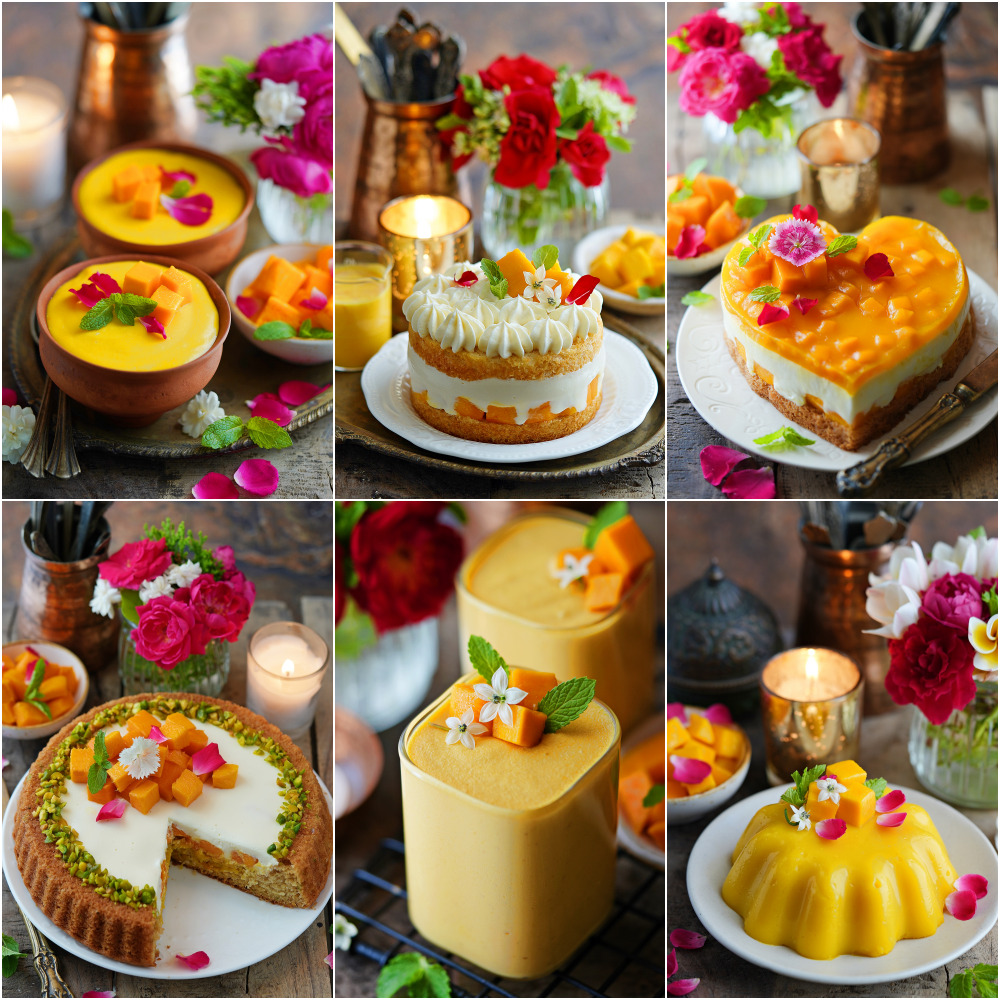
My childhood memories are all mixed up with people, places, trains, travel and mangoes of course. Every dessert I create using mangoes makes those memories come alive. Adding beautiful raspberries to a mango dessert adds another layer to life, bridging the gap between childhood and adulthood, making me grateful for the years that have gone by. As I always say, it’s the little things in life that make you happy, and this Eggless Mango Raspberry Trifle is a fine example. Every spoon was worth it, every bite had a myriad flavours and textures, the freshness was special.
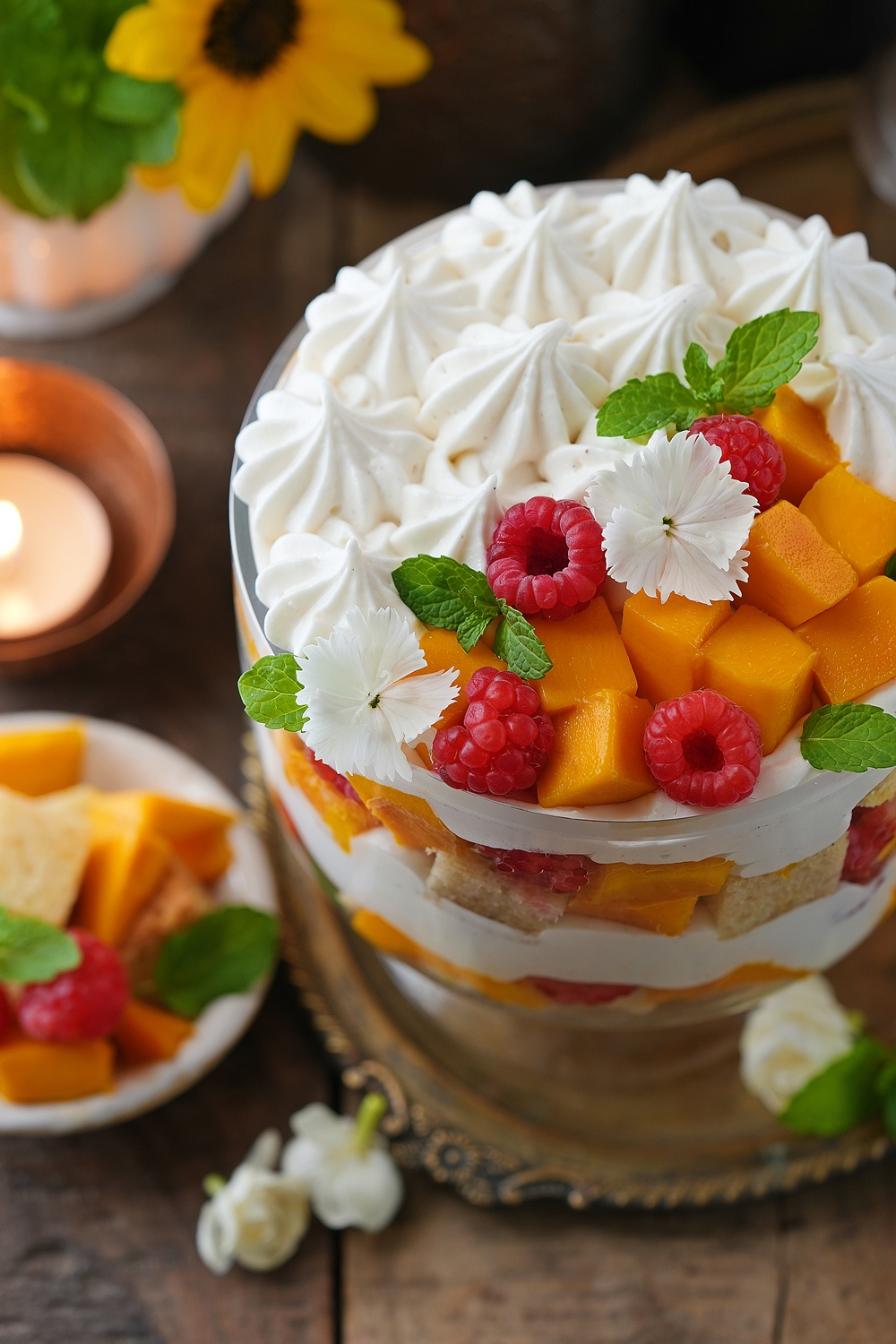
Baking without eggs. Does it work?
The crumb of the eggless sponge is light and airy, a recipe I have developed over the years. I often tweak it a little and am constantly surprised at how good the cake turns out. If you are new here, I’d like to add that I bake without eggs, a choice I have made over the last few years following egg shortages and the pandemic. I never did like the eggy taste in cake and eggfree baking has been the best thing to happen to my baking ever.
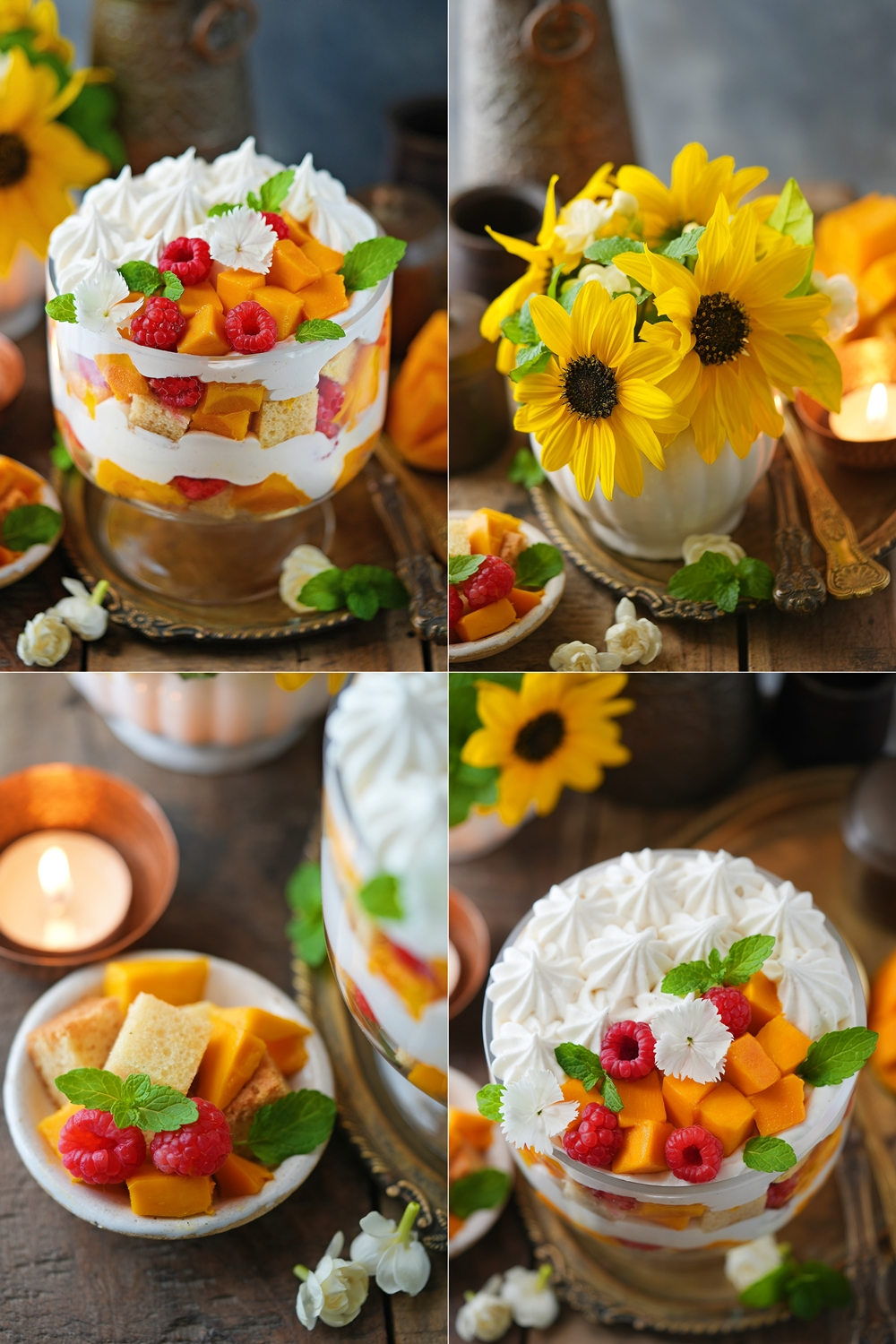
Pros & Cons of baking cakes without eggs
Also, once I figured out how easily you could bake sans eggs, I have never looked back. The pros of eggless baking are fabulous – staple pantry ingredients, one bowl batters, fuss free and easy, quick to bake up and quicker clean up.

Going eggless makes a recipe allergy friendly, in addition to offering health benefits with lower cholesterol, lower saturated fats etc. Another very interesting fact is that vegetarian or eggless recipes can be very easily veganised and I find that’s a huge plus.

The cons of course might be that at times you cannot get the cloud like lightness that egg whites offer. Also, sometimes eggless cakes tend to turn out denser and lack the predictable structure and texture that bakes with eggs provide, but that’s something I’m willing to sacrifice. I find that experimenting is useful and it never hurts to play around with ingredients to get a better result. I’ve had great results as above, and I absolutely believe in the process. Baking desserts without eggs is very possible and if it tastes good, I mean great, I’m in!! This Eggless Mango Raspberry Trifle was just that and more – absolutely GREAT!
Eggless Mango Raspberry Trifle
Equipment
- 1 Oven
- 1 Electric hand beater or balloon whisk
- 1 6" square baking tin or round
- 1 Serrated knife
- 1 Piping bag
- 1 Large 1A piping nozzle
- 1 Large star piping nozzle
Ingredients
Eggless vanilla sponge
- 105 g cultured buttermilk/plain chaach
- 25 g neutral oil
- 50 g raw sugar / desi khaand castor sugar
- 1/2 tsp baking powder
- 1/4 tsp baking soda
- 1/2 tsp apple cider vinegar
- 1/4 tsp vanilla extract
- 1 pinch salt
- 85 g all purpose flour maida
Vanilla cream
- 250 g whipping cream chilled, see notes
- 4-5 tbsp castor sugar
- 1/2 tsp vanilla bean extract
Fruit
- 1 ripe medium mango peeled, diced
- 125 g raspberries
Instructions
Eggless vanilla sponge
- Preheat the oven to 180C.
- Line a 6″ square tin with parchment paper.
- In a large bowl, add all the ingredients and give them a good whisk using a balloon whisk or an electric hand beater.
- Turn the batter into the tin, tap sharply on the counter and bake for 20-25 minutes, until the tester comes out clean. Cool in tin for 10 minutes, then cool completely on the rack. Dice into squares.
Vanilla cream
- Add the cold cream, sugar and vanilla extract to a large bowl and beat until mousse like and firm. See notes if you don't have a whipping cream with at least 35% fat.
- Transfer the cream to a piping bag fitted with a large 1A round piping nozzle.
- Take a trifle bowl. The one I used has a diameter of 5" across and is 3" tall.
Layers
- Layer up the trifle bowl as you like. Save some mango and raspberries for the top to garnish. Here's what I did.
- Layer 1 : Mix of cake, mangoes and raspberries. Do make sure the fruit is gently pressed against the trifle bowl sides to make the colours visible and the trifle look pretty.
- Layer 2 : Pipe a generous layer of vanilla cream over the cake and fruit mix gently pressing to hold the layer in place.
- Layer 3 : Mix of cake, mangoes and raspberries. You might have cake left depending on the size of the trifle bowl. I had enough left over for a stand alone glass as well.
- Layer 4 : Pipe a layer of vanilla cream over the cake and fruit mix.
- With a piping bag fitted with a star nozzle, pipe stars over half the top with the remaining cream. Look at the image for reference. Scatter raspberries and diced mango over the rest and finish with fresh mint and edible flowers.
- Chill for a couple of hours or better overnight for the flavours to mature and the trifle to get moist.
Notes
- You can use a liqueur of choice or simple syrup to moisten the diced cake. My cake was really moist so I didn’t need anything.
- If you don’t have whipping cream, you could stabilize a lower fat chilled cream with either a cold mousse gelatin, 1.25tsp ground with the sugar, else with 25g of melted, cooled white chocolate. If you use white chocolate, you might consider reducing the sugar to taste.
Related Posts:
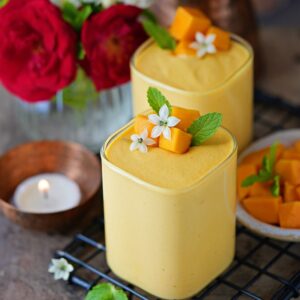
- Eggless Mango Mousse - delicious quick 3 ingredient dessert
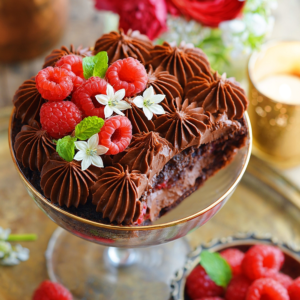
- Eggless Chocolate Raspberry Trifles ... simple,…
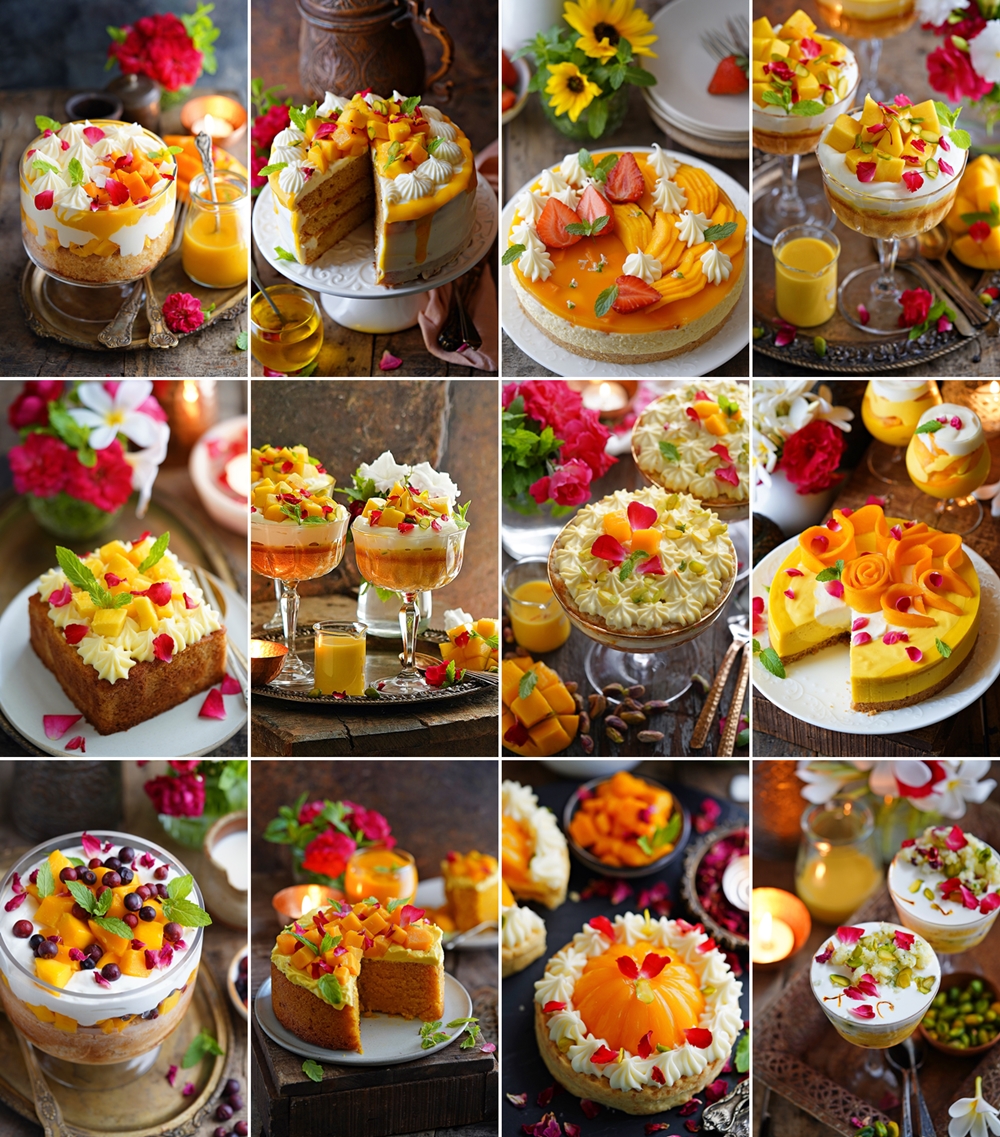
- MANGOES - 10 delightful eggless dessert recipes…
- 10 Pretty Spring Desserts to make now ... fresh & colorful

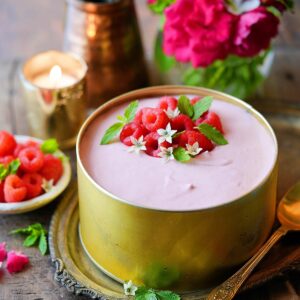
- Raspberry Dream Cake ... the Magic of Eggless Baking ♥
- Eggless Blueberry Cheesecake Trifle ... 6 layers of…


You May Also Like

C is for Chettinad, Chidambaram Vilas & Chettinadu Cuisine. Off the beaten track -Karaikudi, South India

Charming St. Gallen with Switzerland Tourism {PART 2}